Are We Still Putting Bloom’s Taxonomy to Good Use?
Glance quickly over lesson plans, teacher professional development or curriculum guides, and you’re bound to see a certain name: Bloom’s Taxonomy. Since its release all the way back in 1956, this great tool has been instrumental in influencing the way instructors design learning objectives and assess student progress.
But the thing is here—things are different now. Classrooms aren’t chalk and talk anymore. We have interactive whiteboards, online learning platforms, AI tools and an entire new generation of learners with new needs. So it’s time to pose the question: Are we actually applying Bloom’s Taxonomy as well as we possibly can? Or is it just another box we tick off without really thinking about it?
Let’s dig in and take a closer look at what Bloom’s Taxonomy has to offer today, where it might be lacking, and how we can refresh our approach to keep it current and effective.
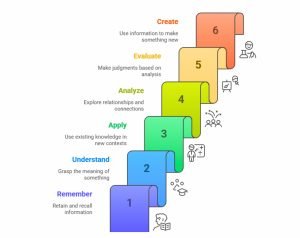
✅ Why Bloom’s Taxonomy Still Has Value
Despite all the evolution of education, Bloom’s Taxonomy is still doing a lot of good. Used intentionally, it assists educators in:
- Setting specific, significant goals for student learning
- Constructing lessons that move from basic comprehension to deeper thinking
- Challenging students to think critically and creatively
- Aligning assessments with instructional goals
- Supporting key life skills like communication, flexibility, and problem-solving
At its essence, Bloom helps us move beyond memorization. It’s about teaching students how to think, not just what to think.
🚫 Where Things Get Off Track
That being said, it’s not always applied as it should be. Often, teachers focus only on the first few levels—remember and understand. This limits learning and hinders growth.
Common mistakes include:
- Using vague objectives like “Students will understand…”
- Teaching mainly to help students pass tests
- Skipping higher levels like analyze, evaluate, and create
- Relying too much on lectures
- Not adjusting Bloom’s to suit digital or blended learning environments
To develop true problem-solvers and creators, we need to stretch students and use the full potential of Bloom’s.
💡 How to Make Bloom’s Work in Today’s Classrooms
Let’s face it—the classroom of 2025 looks nothing like that of 1956. Technology is everywhere, and students learn in far more connected, flexible ways. Teachers are no longer just “content experts”—they’re learning guides.
So how do we make Bloom’s fit this new world?
🔄 Pair It with the Right Tools
Each level of Bloom’s can be enhanced with simple, effective tech:
📌 Remember – Use Quizlet, Kahoot!, or flashcard tools
🎥 Understand – Watch short videos, then summarize or explain in your own words
🛠️ Apply – Solve real-world tasks using spreadsheets, coding tools, or simulations
🧩 Analyze – Break down case studies, compare data or opinions
🧪 Evaluate – Debate topics, write reviews, or give peer feedback
🎨 Create – Design a project, record a podcast, or build a digital presentation
💬 Technology doesn’t replace good teaching—it extends it.
🧑🏫 How Teachers Can Use Bloom’s More Effectively
Here are some practical strategies for teachers who want to make the most of Bloom’s:
- Set Clear, Action-Based Goals Use strong verbs: create, compare, design, evaluate—not just “understand.”
- Mix Up the Learning Activities Include tasks from every level:
🟢 Lower – Match terms, retell stories
🟡 Middle – Solve problems, analyze situations
🔵 Higher – Lead discussions, design projects, share new ideas
- Rethink Assessments Go beyond paper tests—use:
- Project-based learning
- Peer assessments
- Digital portfolios
- Make Learning Personal and Real Let students:
- Explore real-life problems
- Investigate personal interests
- Share opinions and reflect creatively
- Reflect at the End of Lessons Ask Bloom-style questions like:
- “What do you remember?”
- “What was new to you today?”
- “How might you use this?”
- “What would you change next time?”
🌍 How Bloom’s Supports Global Education Trends
Across the world, learning is becoming:
- Personalized
- Tech-integrated
- Competency-based
Bloom’s fits perfectly—with a little creativity:
| Trend | How Bloom’s Helps |
|---|---|
| Critical thinking | Analyze, Evaluate, Create |
| Project-based learning | Real-world application and creativity |
| Digital learning | Pairs with interactive tools and platforms |
| Soft skill development | Encourages communication, reflection, collaboration |
| Global citizenship | Promotes empathy and understanding different viewpoints |
✨ It’s not about replacing Bloom’s—it’s about reimagining how we apply it.
🔮 What’s Next for Bloom’s?
Bloom’s Taxonomy isn’t fading—it’s evolving. Today, it’s being used alongside:
- SAMR – Redefining tasks with technology
- TPACK – Merging tech, pedagogy, and content knowledge
- Design Thinking – Helping students solve problems creatively
🎯 The goal? Helping students move from knowing to doing—from passive learning to active creation.
So… are we using Bloom’s to its full potential?
Yes—but only when we go beyond the basics.
It’s not just a set of verbs or a planning tool—it’s a powerful mindset for teaching.
To make Bloom’s really work:
✅ Use all six levels, not just the first two
✅ Integrate it with hands-on and tech-driven activities
✅ Encourage curiosity, creativity, and critical thinking
✅ Link lessons to real-world situations
✅ Reflect, adjust, and grow with your students
💡 Bloom’s Taxonomy isn’t just about organizing learning—it’s about unleashing potential in every learner.